Budget 2026 focus on health: India’s public health spending under 2% of GDP, experts seek a sustained push
Ahead of Union Budget 2026-27, analysts and health experts are highlighting that India’s public health spending remains under 2% of GDP, arguing that rising disease burdens and out-of-pocket costs make a stronger, multi-year funding push economically necessary.
A pre-Budget debate: is underfunding health now an economic risk?
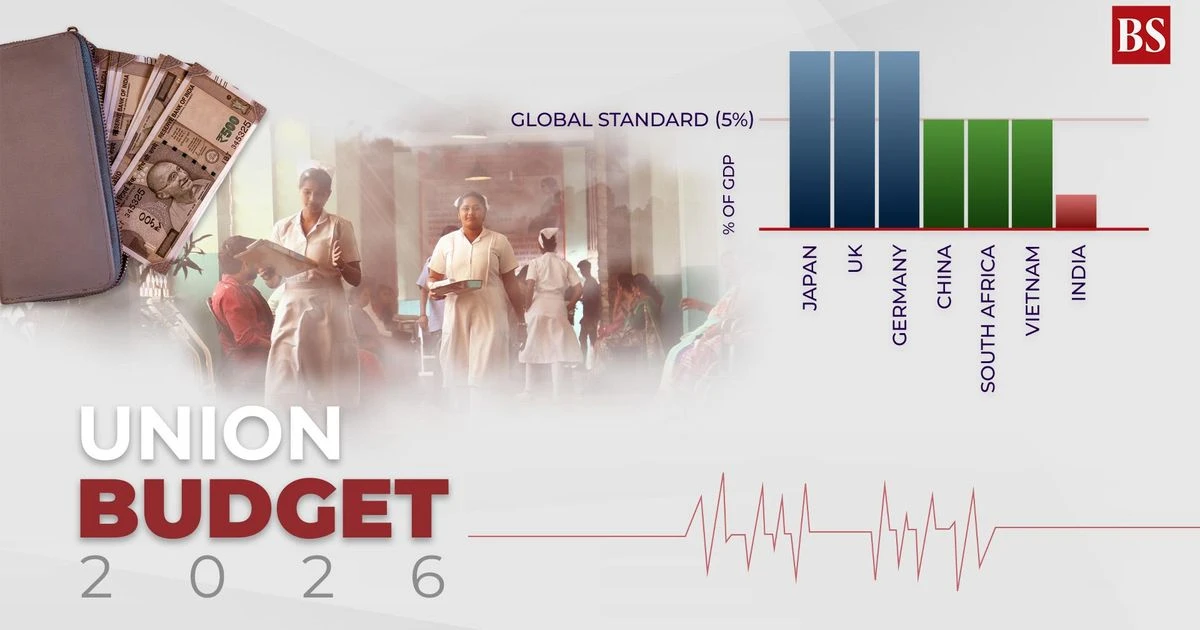
As the Union Budget 2026-27 approaches, healthcare funding is again emerging as a central policy question, with renewed attention on how much India spends publicly on health. A recent analysis notes that India’s public health spending remains under 2% of GDP, a level that many experts argue is insufficient for the country’s growing needs, especially as non-communicable diseases rise and households continue to face high out-of-pocket medical costs.
The debate is not only about welfare; it is also about resilience and productivity. When large numbers of households pay directly for care, health shocks can turn quickly into financial shocks—affecting consumption, savings and labour participation. That linkage is why the question of public health spending is increasingly framed as an economic risk, not just a social sector concern.
Where India stands, and why comparisons matter
The analysis points out that India’s public health spend has stayed around 1.8–2.0% of GDP in recent years, even as the disease profile has shifted and expectations for universal access have grown. It also notes that some middle-income peers allocate a higher share publicly and have built broader coverage, which intensifies the scrutiny on India’s pace of increase and the sustainability of relying heavily on private spending.
Global benchmarks are frequently cited in this discussion. The report references the idea that countries aiming for universal health coverage need to monitor higher levels of public spend, while acknowledging that systems differ by structure and efficiency. Still, comparisons shape perception: if peers can build near-universal coverage with higher public allocation, India’s sub-2% level becomes harder to defend without equally strong outcomes.
What a funding push would need to address
Experts typically argue that higher public spending must translate into capacity and access—primary care, district-level hospitals, diagnostics, workforce and reliable supply chains—rather than only short-term schemes. The key is multi-year predictability so states and health systems can plan staffing and infrastructure. Without that stability, even higher allocations can become fragmented across programmes and fail to shift household spending patterns.
With Budget day near, the central question becomes whether 2026-27 will signal a sustained funding trajectory. The underlying message from the analysis is clear: India’s health needs are rising, and the fiscal choices made now may determine whether the country can reduce out-of-pocket burden while improving preparedness for both chronic disease and episodic shocks.