Jaishankar meets EU envoys ahead of 27 Jan India-EU summit; trade talks set to culminate
External Affairs Minister S. Jaishankar met European Union ambassadors ahead of the India-EU summit scheduled for 27 January 2026, calling for deeper cooperation to “derisk” the world economy. The summit is expected to formally announce the conclusion of India-EU free trade agreement negotiations.
Diplomacy ahead of the summit
India’s External Affairs Minister S. Jaishankar met ambassadors from European Union countries ahead of the India-EU summit scheduled for 27 January 2026, underscoring what he described as an era where volatility and instability have become the new normal. In his outreach, he pushed the case for closer India-EU collaboration as a stabilising force in trade, technology and security.
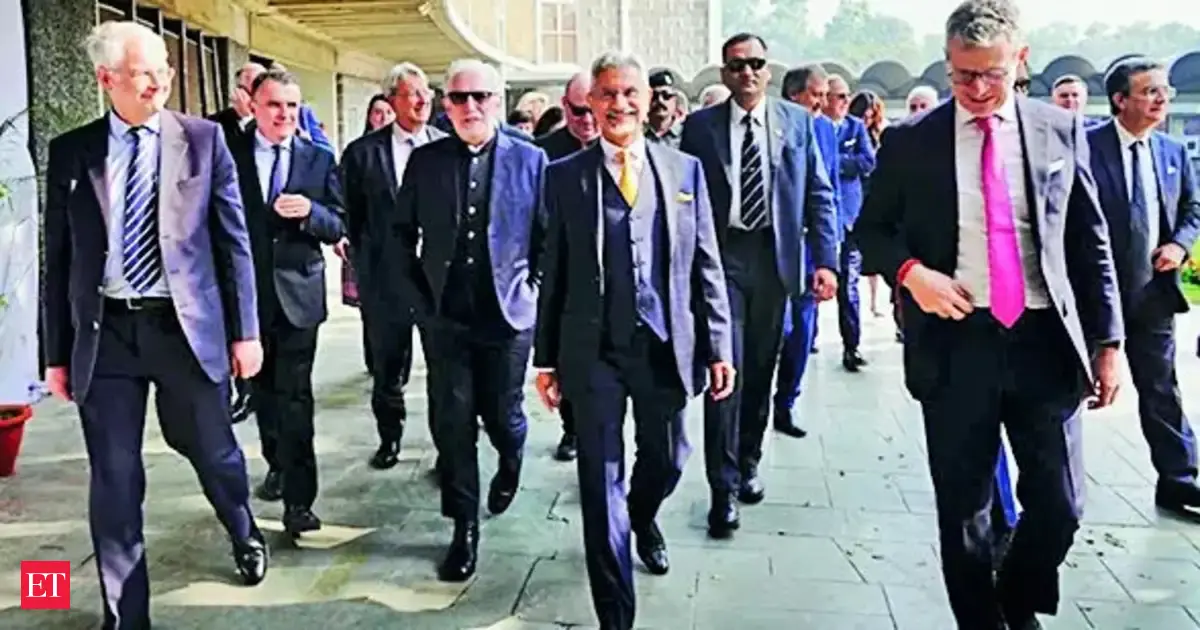
Jaishankar’s central message was that stronger India-EU ties can help “derisk” the world economy. In practical terms, that means building resilient supply chains, widening cooperation on mobility and security, and working together on the provision of public goods—from humanitarian assistance and disaster relief to anti-piracy operations and development initiatives.
Free trade agreement expected to be announced
The meeting comes as the India-EU summit is expected to see a formal announcement that negotiations for a Free Trade Agreement (FTA) have concluded. If confirmed at the summit, it would mark a major milestone in a long-running effort to upgrade the economic relationship between India and the EU, with attention on market access, industrial cooperation and rules that govern cross-border commerce.
According to the report, the summit calendar also included participation by senior EU leadership around Republic Day engagements, followed by the summit itself. This sequencing has been read as a signal that both sides want to accelerate strategic alignment at a time when global trade is being reshaped by geopolitical risk and supply-chain disruptions.
What it could mean for India and Europe
For India, a deeper economic partnership with the EU is typically framed as an opportunity to diversify export markets, attract investment and strengthen manufacturing and services linkages. For Europe, India is increasingly positioned as an essential long-term partner—both as a large market and as a strategic counterweight in a fragmented global economy.
The next steps will be crucial: translating political signalling into legal text, timelines and implementation plans, and managing sensitive sectors where tariff structures, regulatory standards and domestic industry concerns can slow down execution even after negotiations are declared complete.