Markets: Sensex, Nifty fall over 4% in January amid FPI selling, rupee weakness and global risk-off mood
India’s benchmark indices Sensex and Nifty slid more than 4% in January 2026, with reports citing sustained foreign portfolio investor outflows, a weakening rupee, muted earnings and global uncertainties including geopolitical tensions and tariff concerns.
January slump deepens for Indian equities
Indian equity benchmarks have had a rough January 2026. Market data cited in the report shows the BSE Sensex down about 4.32% for the month (a drop of 3,682.9 points), while the NSE Nifty has declined roughly 4.13% (down 1,080.95 points). The fall has been attributed to a mix of domestic and global pressures rather than a single trigger.
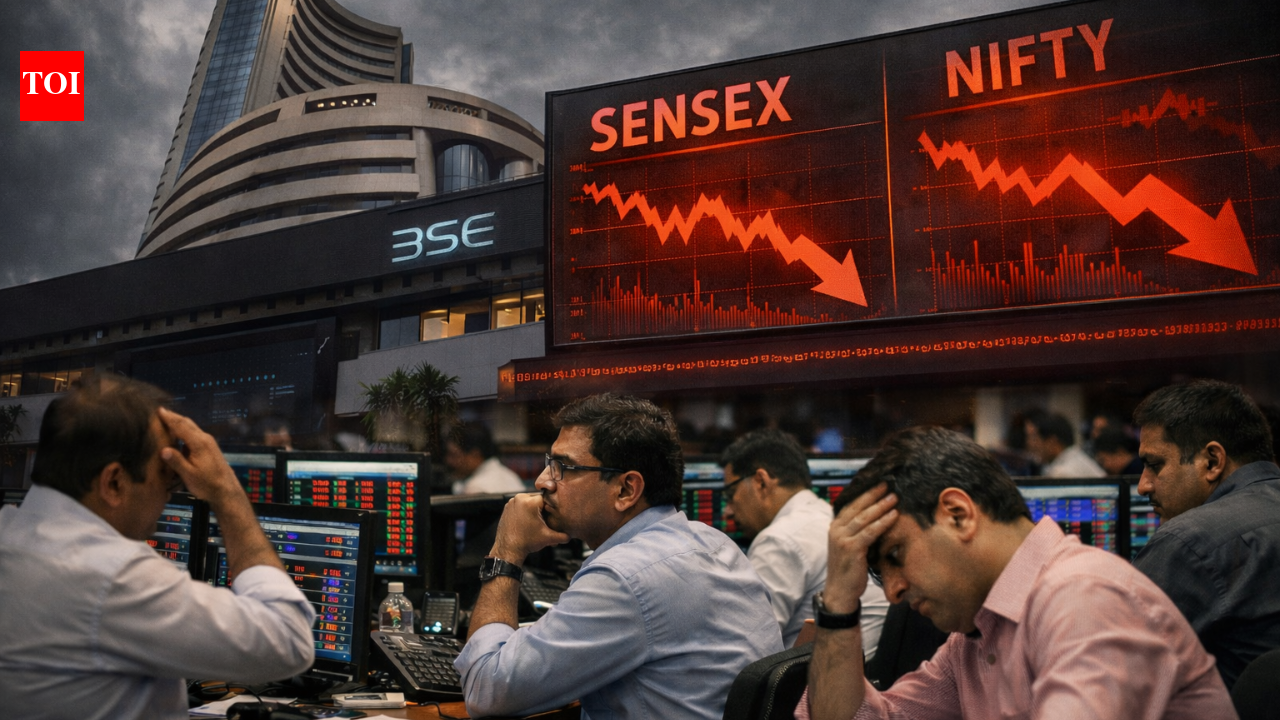
Among the headline factors: sustained foreign portfolio investor (FPI) outflows, a weakening rupee, muted corporate earnings in parts of the market, and broader global uncertainty. The overall environment has been described as “risk-off”, where investors prioritise safety, reduce exposure to volatility and become cautious about assets perceived as sensitive to global shocks.
Key drivers: flows, currency, earnings and geopolitics
The report links the index weakness to aggressive selling by foreign portfolio investors during the month. The rupee’s weakness has compounded caution, as currency pressure can raise imported costs and alter expectations around inflation and rates. Elevated crude oil prices and rising global bond yields are also cited as adding to risk aversion.
Earnings have played a role too. Disappointments from certain heavyweight stocks across sectors—including IT, banking and consumption-linked names—have dampened optimism. When large index constituents underperform, it can pull the benchmarks down even if parts of the market remain stable.
The Budget factor and the “January pattern”
The report notes that January has historically been a weaker month for equities in several recent years. It also highlights a familiar market narrative: pre-Budget weakness followed by hopes of a post-Republic Day recovery heading into the Union Budget 2026-27. While that pattern is not guaranteed, it shapes positioning and sentiment, particularly among short-term traders.
- Sensex: down about 4.32% in January 2026 as per cited market data
- Nifty: down about 4.13% in January 2026 as per cited market data
- Key pressures: FPI outflows, rupee weakness, earnings disappointment, geopolitical tensions, tariff concerns
- Additional global headwinds: elevated crude prices and rising bond yields
A market fall driven by multiple levers—flows, currency, earnings and geopolitics—typically takes longer to reverse because confidence must return on more than one front.
For investors, the practical question becomes whether the next leg of movement is driven by domestic policy cues from the Budget, stabilisation in global risk sentiment, or a change in FPI flow trends. Until at least one of those improves decisively, volatility may remain elevated.