Sensex and Nifty fall over 4% in January amid FPI outflows, weaker rupee and global risk-off sentiment
India’s benchmark equity indices were down more than 4% in January 2026, with analysts pointing to foreign portfolio investor selling, rupee weakness, mixed earnings and heightened global uncertainty—including geopolitical tensions, tariff concerns, crude prices and bond yields.
Benchmarks under pressure through January
India’s major equity benchmarks, the BSE Sensex and NSE Nifty, declined by more than 4% during January 2026, reflecting a tough start to the year for domestic stocks. The move was driven by a combination of local and global factors that weighed on investor confidence and encouraged risk reduction.
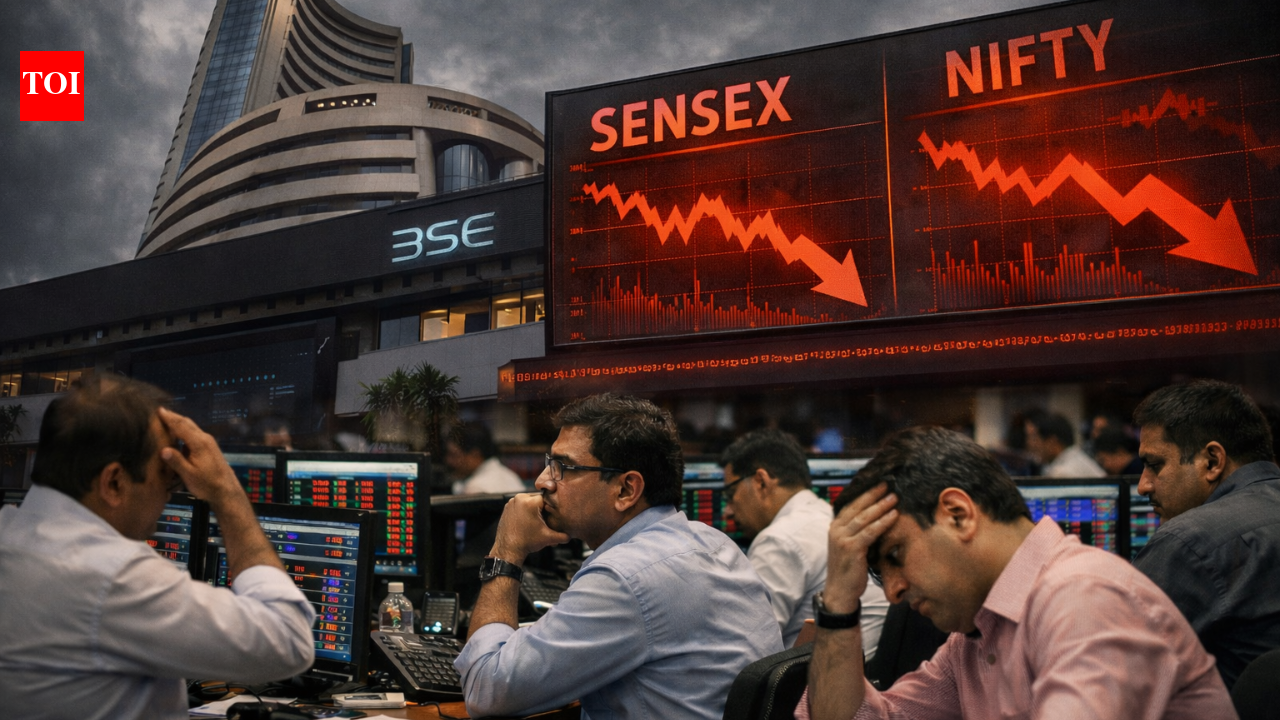
Market data cited in the report showed the Sensex down 3,682.9 points, or 4.32%, and the Nifty down 1,080.95 points, or 4.13%, for the month at the time of reporting. Analysts described the fall as consistent with a broader risk-off phase, amplified by cross-border uncertainty and currency stress.
FPI selling and rupee weakness add to volatility
A central driver highlighted was sustained foreign portfolio investor (FPI) selling, alongside a weakening rupee. When overseas flows turn negative, heavyweight index constituents can see sharper swings, and the currency move can further shape inflation and import-cost expectations, feeding into market caution.
The report also pointed to geopolitical tensions and renewed concerns about tariffs as part of the global backdrop affecting sentiment. Such themes can raise uncertainty around supply chains, commodity prices and the direction of global demand, influencing Indian equities even without immediate domestic triggers.
Earnings, crude and bond yields in focus ahead of Budget
Muted or disappointing earnings from select heavyweight companies, including in IT, banking and consumption-linked sectors, were described as adding to the downbeat tone. Elevated crude oil prices and rising global bond yields were also flagged as contributing to risk aversion and tighter financial conditions.
With the Union Budget 2026–27 approaching, market participants were watching for signals that could balance growth support with macro stability. Analysts referenced past patterns where January weakness has sometimes been followed by a post-Republic Day recovery into the Budget period, though outcomes depend on both domestic policy cues and external risk conditions.