Sensex and Nifty slide over 4% in January as FPI selling, rupee weakness and global risks weigh
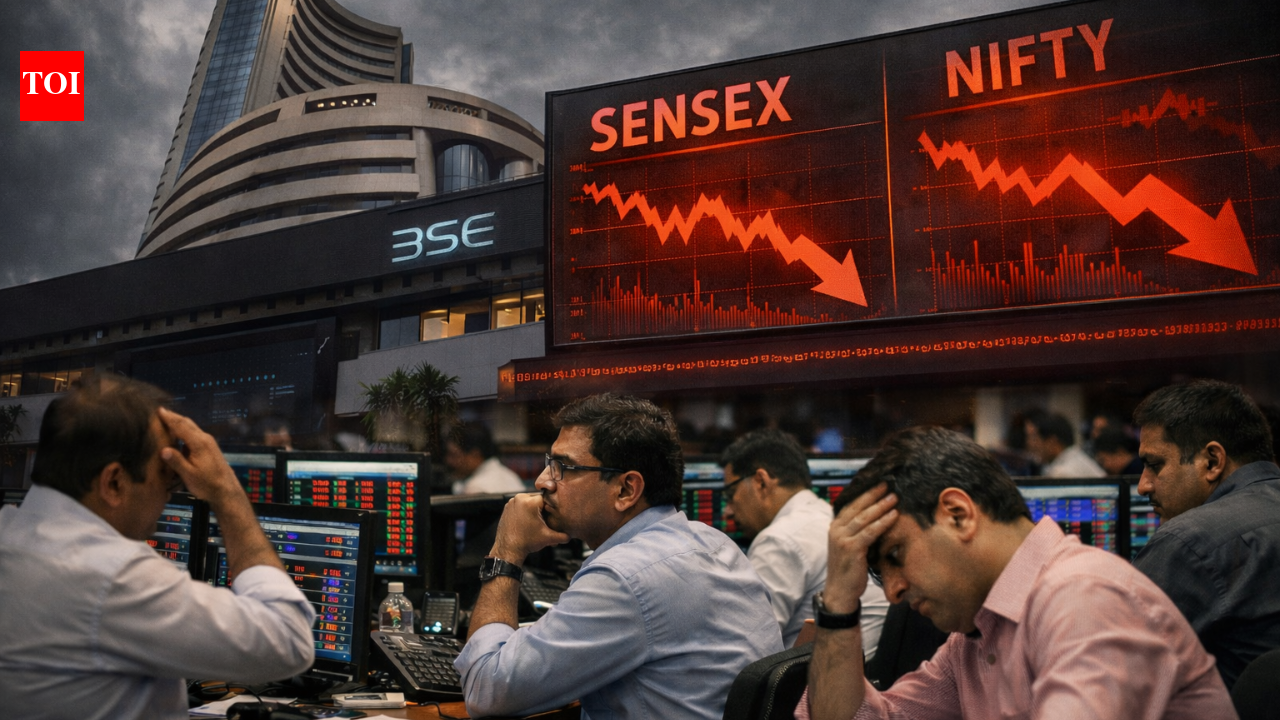
India’s benchmark indices Sensex and Nifty have fallen more than 4% so far in January 2026. Market commentary cited sustained foreign portfolio investor outflows, a weakening rupee, muted earnings and global uncertainty, with the upcoming Union Budget expected to shape sentiment.
A weak January for Indian equities
India’s key stock indices have seen a sharp pullback in January 2026, with both the BSE Sensex and NSE Nifty down by more than 4% during the month. The fall has been attributed to a combination of domestic and global pressures: foreign portfolio investor (FPI) selling, rupee weakness, and softer corporate earnings in some heavyweight sectors.
Market participants have also pointed to wider geopolitical uncertainty and renewed tariff-related worries globally, which have reinforced a risk-off mood. With capital flowing into safer assets in uncertain periods, emerging markets like India often see sharper swings driven by overseas flows.
What’s driving sentiment: flows, currency and earnings
FPI outflows remain a central theme in the current move. When foreign investors pare exposure, liquidity thins and benchmarks tend to amplify declines, particularly in index-heavy large-cap stocks. A weakening rupee adds another layer: it can raise the cost of imports and influence inflation expectations, while also shaping foreign investors’ returns when converted back to dollars.
Corporate earnings have also mattered, with several results failing to lift sentiment. In risk-off phases, investors demand stronger guidance and cleaner balance sheets, and any disappointment can accelerate profit-booking. Add elevated crude oil prices and global bond yields, and the headwinds multiply.
Budget watch: hope for a post-Republic Day turn
As attention shifts to the Union Budget 2026–27, brokerages and research desks are watching for signals on growth support versus fiscal discipline. Some analysts note that January has historically been volatile in the run-up to the Budget and that markets sometimes stabilise after Republic Day as clarity improves on policy priorities.
Still, any near-term rebound will likely depend on whether global risk appetite improves and whether domestic policy signals offer credible support to growth without unsettling macro stability.