Tejashwi Yadav appointed RJD national working president at Patna meet
RJD has elevated Tejashwi Yadav as national working president, formalising a generational shift in leadership. The move, announced at the party’s national executive meeting in Patna, also triggered sharp reactions from within the Yadav family.
A formal elevation inside RJD
Rashtriya Janata Dal (RJD) has appointed Tejashwi Yadav as the party’s national working president, a decision announced on 25 January 2026 during the national executive meeting in Patna. The appointment is seen as a significant organisational step, reinforcing Tejashwi’s position as the party’s central leader as it navigates future electoral challenges.
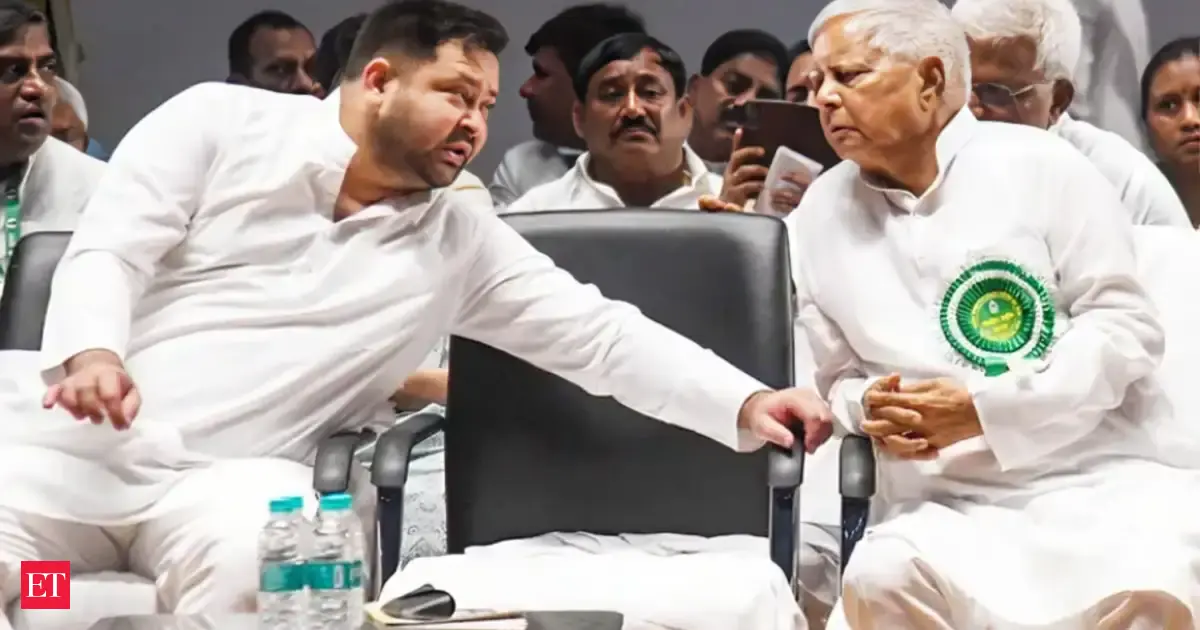
Reports noted that the appointment letter was handed over in the presence of party supremo Lalu Prasad Yadav and senior leaders, signalling a clear transition in day-to-day authority and organisational control. The creation and utilisation of the post also points to structural changes meant to streamline decision-making and project leadership continuity.
Family politics spills into public view
The announcement also surfaced tensions within the Yadav family. Tejashwi’s sister, Rohini Acharya, criticised the development publicly, indicating concerns about internal dynamics and alleging that the transition may not be as straightforward as the party’s official messaging suggests.
Such public airing of disagreements is politically consequential because it can shape perceptions among cadres and allies, particularly for a party where family leadership has historically been integral to identity and mobilisation.
What the move could mean
For RJD, the elevation is expected to sharpen campaign command and provide a clear chain of authority as the party seeks to expand beyond its core base while defending its relevance in Bihar’s competitive landscape. For Tejashwi, it formalises a leadership role he has effectively played in recent years, but with more explicit organisational backing.
The coming weeks are likely to show how the new structure is operationalised: appointments, internal committee decisions, and how the party frames its strategy and alliances ahead of upcoming political contests.