Tejashwi Yadav appointed RJD’s national working president as party creates new post
RJD elevated Tejashwi Yadav as national working president at its Patna meeting, a move seen as a formal leadership transition and organisational reshuffle. The decision comes amid visible friction within the wider Yadav family’s political ecosystem, and party leaders described it as a generational shift meant to strengthen control over day-to-day organisation and strategy.
The Rashtriya Janata Dal (RJD) on Sunday, January 25, 2026, appointed Tejashwi Yadav as its National Working President, creating a new role within the party’s organisational structure. The elevation, announced at a party meeting in Patna, is being read as a formal step to institutionalise Tejashwi’s leadership responsibilities beyond campaign-facing politics.
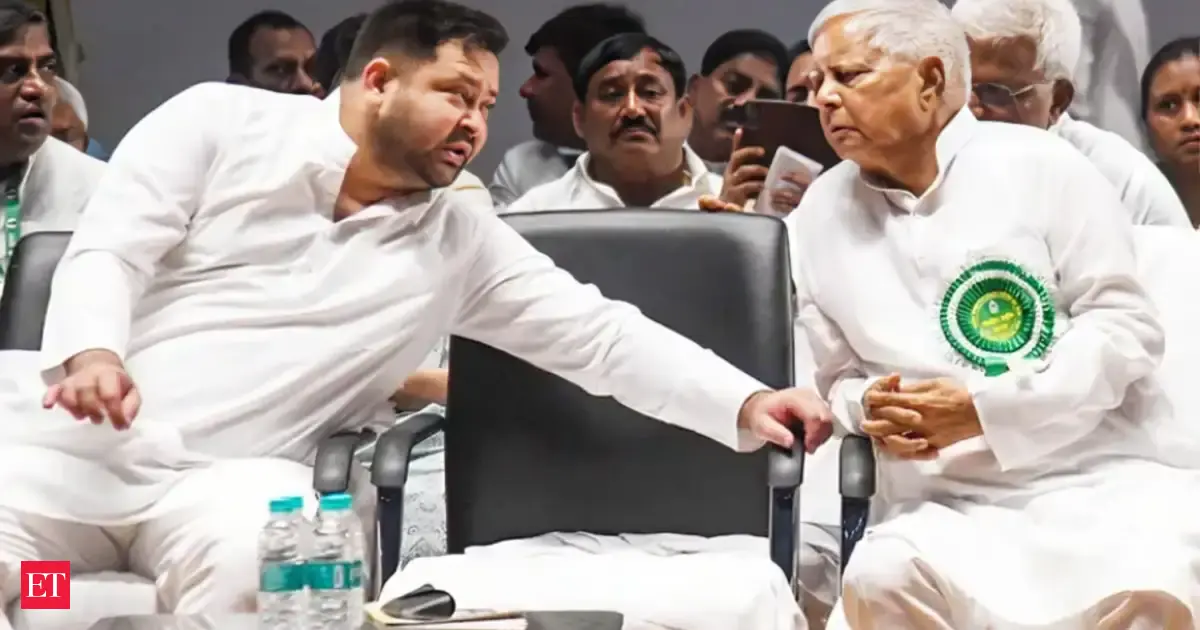
Tejashwi, son of party supremo Lalu Prasad Yadav, has for years been positioned as the party’s principal mass leader and the face of its day-to-day politics, especially in Bihar. The new post, by design, is expected to widen his control over organisational decisions and routine political management—functions typically critical ahead of election cycles and alliance negotiations.
The appointment also surfaced against the backdrop of reported internal disagreements within the broader family network that has shaped the party for decades. Media reports noted that Tejashwi’s sister Rohini Acharya criticised the shift and alleged that the party’s command has fallen into the hands of “infiltrators and conspirators,” indicating continuing friction around accountability and influence within the organisation.
For the RJD, the move is significant not only because it introduces a new designation, but because it signals an effort to make leadership succession appear procedural and planned rather than ad hoc. Parties with strong founder-centric histories often use such titles to bridge the gap between symbolic authority and operational leadership.
In practical terms, the working president’s office can shape ticket distribution processes, cadre mobilisation, communications strategy and coalition outreach—areas that determine whether a party translates popularity into seats. As Bihar’s political contest remains intensely competitive, organisational clarity is likely to be a priority for the RJD.
The party’s next steps—how responsibilities are divided, who retains control over key committees, and whether dissenting voices are accommodated or sidelined—will decide whether the reshuffle consolidates the party or deepens internal fault lines. For now, the appointment has put Tejashwi at the centre of both the party’s public strategy and its internal power equation.