Report flags rising AI-driven chip appetite: India’s semiconductor demand seen climbing by end-2026
A report cited by ETTelecom says India’s semiconductor demand is expected to rise sharply in the AI era, with downstream firms indicating stronger appetite for AI accelerators, custom silicon and memory-heavy chips as deployments scale.
Why semiconductor demand is being discussed again
A new report cited by ETTelecom suggests that India’s semiconductor demand could climb significantly by the end of 2026, driven by the rapid expansion of artificial intelligence workloads and the growing need for specialised chips. The report frames the change as part of a broader global shift where AI is reshaping demand patterns across compute, storage and networking.
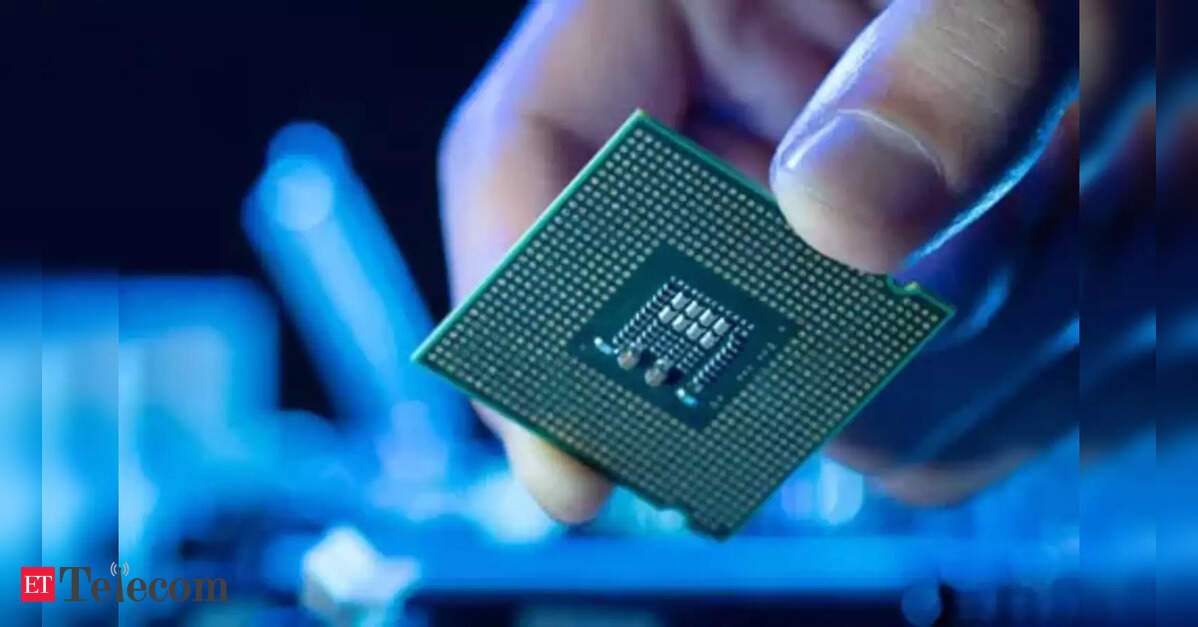
In practical terms, AI deployments often require a different hardware mix than traditional enterprise IT. Beyond standard CPUs, organisations increasingly seek AI accelerators (chips optimised for model training and inference), large memory footprints, and higher-throughput interconnects—pushing demand not only for compute silicon but also for memory and supporting components.
What downstream organisations say they need
The report, attributed to Capgemini Research Institute, indicates a strong share of surveyed Indian downstream organisations expect increased demand for AI chips as well as custom silicon such as ASICs. The emphasis on custom silicon reflects a common industry strategy: companies try to reduce cost per inference, improve latency, and tailor performance to specific applications by designing purpose-built hardware.
Memory-intensive chips are also highlighted. This aligns with the reality that modern AI models can be constrained by memory bandwidth and capacity. Even when compute is available, moving data efficiently can be the bottleneck, making memory and packaging technologies central to performance gains.
What it could mean for India’s tech ecosystem
A sustained rise in demand can influence priorities across the ecosystem: data centres may expand, cloud and telecom firms may increase capex, and device makers may redesign product roadmaps around on-device AI features. It can also push skill needs upward, from hardware design and verification to systems engineering and deployment optimisation.
At the same time, higher demand does not automatically translate into domestic manufacturing capacity. Supply chains for advanced chips remain globally distributed. For India, the key question becomes how demand growth translates into investment in assembly, testing, packaging, design services, and, over time, fabrication-linked capabilities.