Nationwide bank strike disrupts branch services as unions press for 5-day work week
Public sector bank staff across India went on a nationwide strike on 27 January 2026, seeking a uniform five-day work week and notification of all Saturdays as holidays. Unions say talks with authorities failed, while customers are advised to expect disruption at branches even as digital payments continue.
What happened on 27 January 2026
Branch banking at many public sector banks was hit on Tuesday, 27 January 2026, as the United Forum of Bank Unions (UFBU) observed a nationwide strike to push for a five-day working week. Reports from multiple cities said several branches were either fully closed or running with limited staff, leading to delays and cancellations for routine counter services.
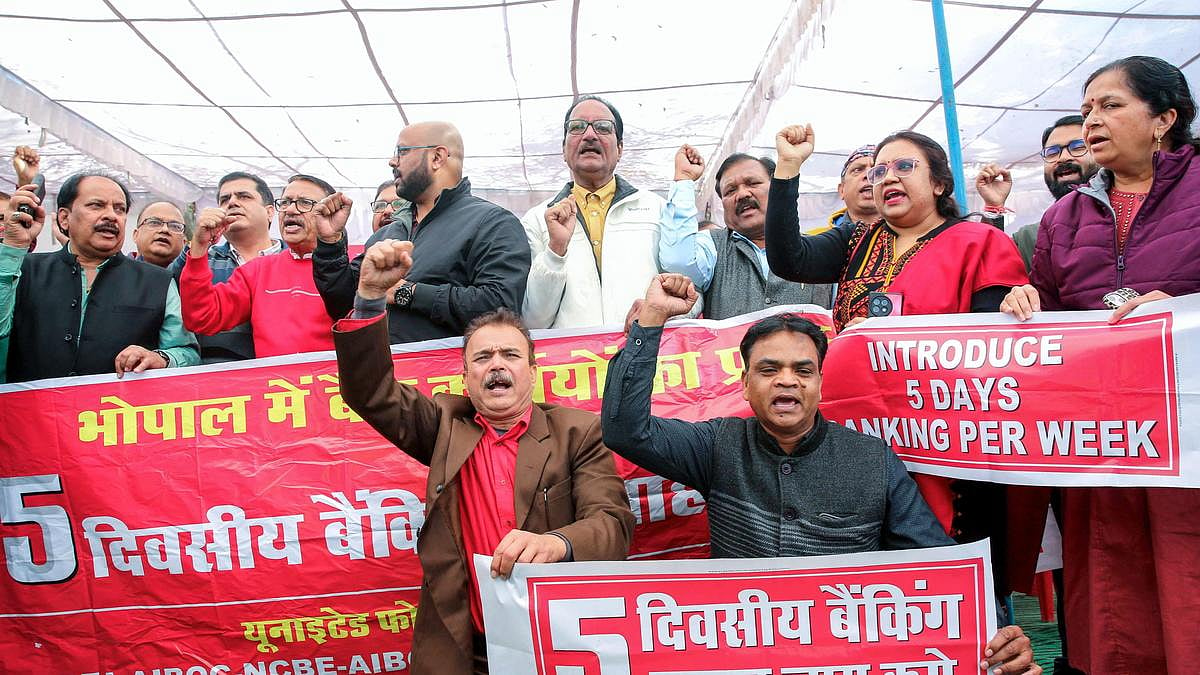
Unions say the core demand is a uniform five-day week, which would effectively make all Saturdays non-working for banks. They argue that a move to five days is overdue and would align banking with many other institutions and markets that do not operate on Saturdays. The strike followed a conciliation meeting with the Chief Labour Commissioner on 23 January that did not produce an agreement, after which unions decided to go ahead.
Services likely affected—and what may still work
Customers were told to expect disruptions to in-branch and counter services including cash deposits and withdrawals, cheque clearances, passbook updates, account-related requests, and back-office administrative work. In several places, people arriving for branch work were asked to return later or use digital channels where possible.
Private sector lenders were largely expected to operate normally because their employees are not part of the striking unions. Digital banking channels such as UPI, mobile banking and internet banking were expected to stay functional, although ATM cash availability could be uneven in some locations if replenishment logistics were delayed.
Why unions say the issue is pending
Bank unions have pointed to earlier discussions where declaring additional Saturdays as holidays was part of the larger framework of wage revision and work-condition negotiations with the Indian Banks’ Association, but they say implementation still requires a government notification. Union leaders also framed the demand as a question of parity, saying banking staff should not be treated differently from comparable sectors.
For customers, the immediate impact was practical: branch queues, rescheduled appointments, delayed cheque processing, and uncertainty about when normal counter operations would resume fully. Most banks advised customers to plan essential branch work around the disruption and to rely on digital options for payments and transfers.